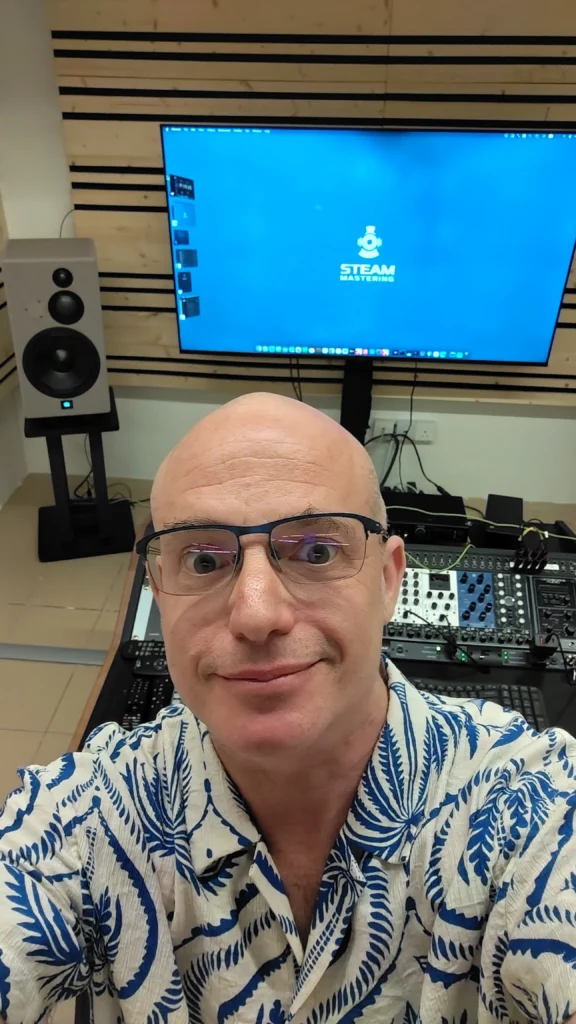
Time for an EQ — and the Hyperion was calling
Over the last month I’ve covered the first three 500 series processors I put in my hybrid chain.
That includes a Pultec style EQ and two very different bus compressors.
There were a few other items I was considering for the chain. By the time I had a budget to start thinking about another one — I had to think about priorities.
I’d learnt over the preceding months that my workflow was leaning towards doing the work in the analog chain first, using plugins for either functions I couldn’t do with my analog gear, or when I couldn’t achieve the change I was after with it.
Given that every master needs some level of EQ, it made sense to add a stereo parametric EQ.
Fully in love with the digital control I was getting from the Wes Audio Dione, my heart was set on trying out the Hyperion.
With four bands and a high pass filter, this seemed like a great option.
First Impressions
As with the Dione, I was very impressed with the sound. The ability to massage the high end — even when needing to boost it — didn’t create harshness.
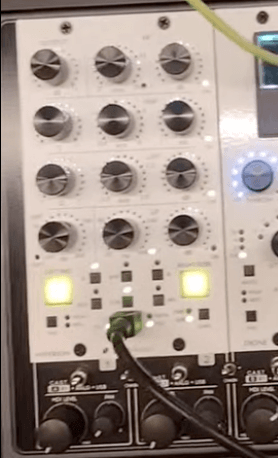
The High Pass Filter — Soft Mode
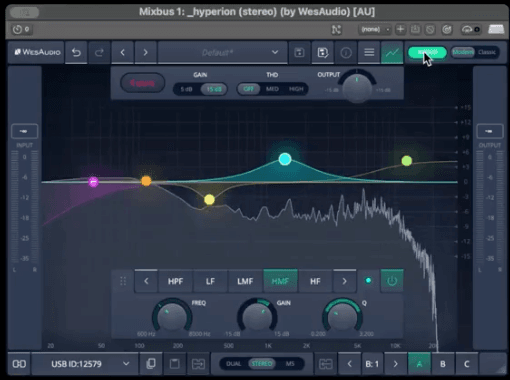
I love the high pass filter soft mode.
Steep HPF curves can create resonances and phase shift around the cutoff — Mike Senior covers this well over at Sound on Sound. The soft mode sidesteps that.
So far I’ve still been using FabFilter Pro-Q 4 before hitting the analog chain to remove problem areas. The Q width can’t go quite as narrow as I’d like on the Hyperion, and both the spectral and dynamic EQ modes of Pro-Q 4 can’t be beaten in the analog realm — yet.
What I Wasn’t Expecting
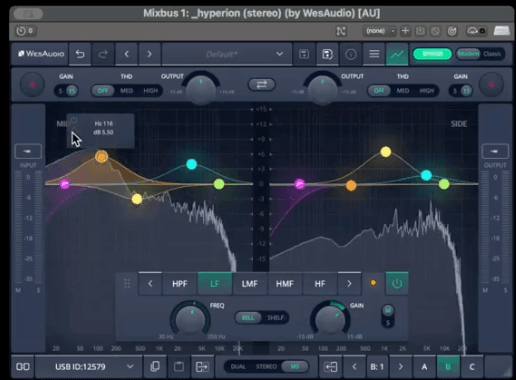
Two things I didn’t even notice when reading up on the Hyperion were the other modes.
2* mono mode — making it possible to use as two channel EQs for mixing.
Mid/Side stereo EQ.
The 2* mono mode is fantastic. Just gives something different — and can be great for processing feature sounds in a mix.
I haven’t had much success with the Mid/Side EQ. So far anything I’ve tried sounds too “phasey” — it’s messing with the phase too much. But maybe it’s a learning process.
Where It Sits Against the Rubber Bands
Overall it was still a great purchase.
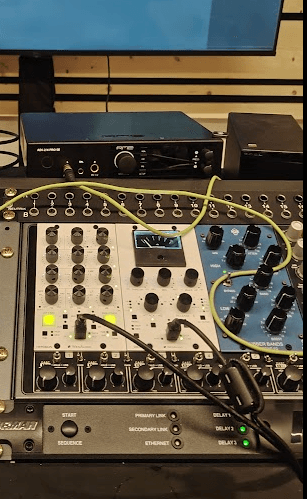
It wasn’t quite able to be the surgical EQ I was hoping it to be — but it counterbalances the IGS Rubber Bands 500 ME very well.
Either I’m using one or the other — or I’m using the Hyperion for the highs and the Rubber Bands for the lows.
Final Thoughts
The Hyperion isn’t the surgical scalpel I set out to buy. It’s something else — a musical, smooth EQ that pairs with the Rubber Bands in a way I didn’t plan for but wouldn’t give up now.
The digital control lives up to what the Dione promised. The soft HPF mode is a genuine highlight. And the 2* mono mode has turned out to be a sleeper feature I keep reaching for.
If you’re building a hybrid chain and wondering whether the Wes Audio ecosystem is worth committing to — based on the Dione and the Hyperion together, I’d say yes.
For a deeper dive on the tech behind filter slopes and why the soft mode matters — Mike Senior’s piece at Sound on Sound is worth your time.
Maybe there’s something else I should consider for that surgical job — what do you recommend?