HYbrid Studio Upgrades part 7 – A colour box to complete the set
Late last year when I was researching some lesser known 500 series processor manufacturers — I stumbled across a company called HRK.
Unfortunately they aren’t around anymore.
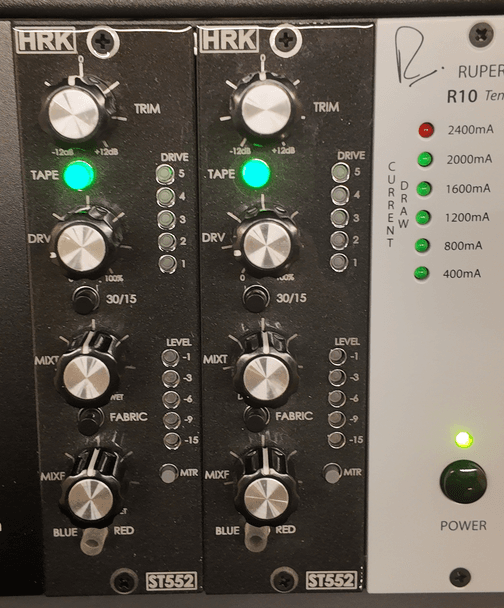
But I did find a lot of reviews about the HRK ST-552 — an analog tape emulator and harmonic processor. HRK described it as an “improvement” of the Rupert Neve Designs tape emulator. It’s got the same kind of controls — input level, tape drive with an LED meter, 30/15 IPS modes for mimicking the LF resonance of tape at different feed speeds, a tape dry/wet blend, and a FABRIC circuit which is HRK’s take on the Neve Silk effect. Red and Blue modes, each with its own dry/wet blend.
For imparting gentle harmonic distortion onto masters — and even individual tracks in mixing — my best friend has been the Pulsar Modular P42 Climax. Occasionally the THD on the Wes Audio devices, or driving the IGS Rubber Bands 500 ME, would be better. But more often than not — the P42 Climax was actually better than anything I had in the analog realm.
To round off the analog chain, I was very interested in something that could impart some transistor colour in a controlled but exciting way.
Finding a Pair
To my luck I found someone willing to sell a pair of the ST-552 modules — but unfortunately only a single CS-566 module.
I can’t compare it to an RND module directly — although the RND MBT is high on my wish list.
The Sound — and the Problem
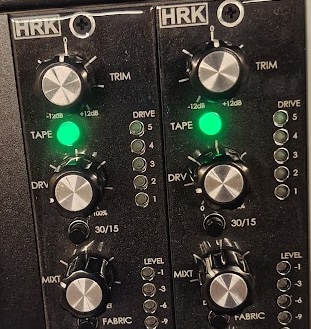
I can categorically say — having this unit, I now understand why other mastering engineers insist on stepped encoders, pots, and switch knobs. And why a true analog bypass is necessary.
To use this in mastering — if anything outside the notched default settings are desired — is very difficult. Pairing left and right correctly is not easy.
But — the sound from this device is amazing.
The Bypass Issue
There have been a few times when I haven’t understood why my levels have been too high or too low — even though every processing section has been disabled.
I’ve learnt though — that just disabling the ST-552’s modules (tape and distortion) isn’t enough. Without true bypass, these modules still affect the signal.
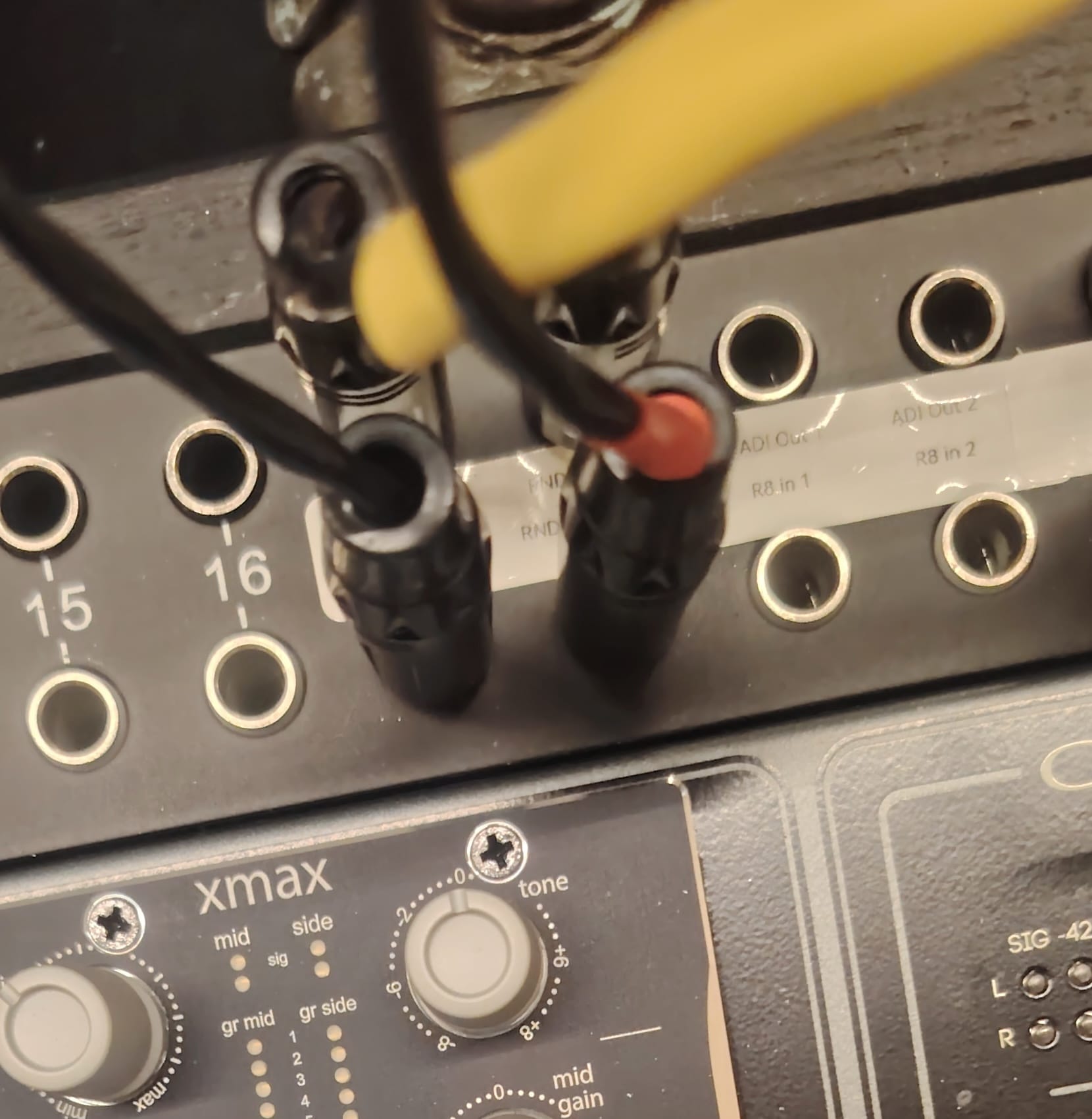
Thankfully it’s not in the main chain. It’s patched in either to the start of my analog mastering chain or the end. So I can just remove the patch cables to avoid it interfering with the signal.
When It Hits — It’s Magic
On the flip side — when it’s needed, the harmonic distortion it creates is beautiful.
One day I’ll analyse it properly. But for now — it’s an option to try that often does something magical.
And yes — I am deliberately using that word. Not because I believe in “magic” — but I do believe if a tool achieves the sound you are chasing, understanding when to use it is more important than understanding exactly why it works.
Final Thoughts
The ST-552 is the most imperfect piece of gear in my rack. Non-stepped pots, no true bypass, fiddly to pair for stereo — and yet when it hits, the harmonic distortion is genuinely beautiful.
It’s not in the main chain. It’s patched in when needed — and pulled out when it’s not. That’s the only way to work around the bypass issue. But the sound it brings when it’s right? Worth the hassle.
If you’re considering a tape emulation or colour module for your chain — and you can find one of these second-hand — it’s worth the gamble. Just go in knowing what you’re getting.
This was the last in the series of my hybrid studio gear it started here A year of hybrid mastering