
The First Two Modules in My Hybrid Chain
Every hybrid studio starts with a blank rack. The first module you slide in sets the tone for everything that follows. So which one do you reach for first?
For me, the criteria were straightforward. I wanted something with a distinct character, but versatile enough to earn its place across the majority of my sessions. Clean enough for mastering work. Colourful enough that I wasn’t left wondering what could have been.
I settled on two: the Elysia Xmax 500 masterbus processor and the IGS Rubber Bands 500 ME.
Links here:
https://elysia.shop/products/xmax-500
https://igsaudio.com/rb-500-me/
The Elysia name came up constantly in conversations. Their plugins had already impressed me, and everyone I spoke to who had used the hardware described it as a meaningful step beyond. I needed to hear it for myself.
On the EQ side, Pultec-style plugins had been a staple in my workflow for years. Having that kind of tonal shaping available in hardware felt like the natural next step. Between the two units, I had EQ and compression covered — the two tools I reach for most in any session.

Let’s do a deep dive of these two modules.
IGS Rubber Bands 500 ME
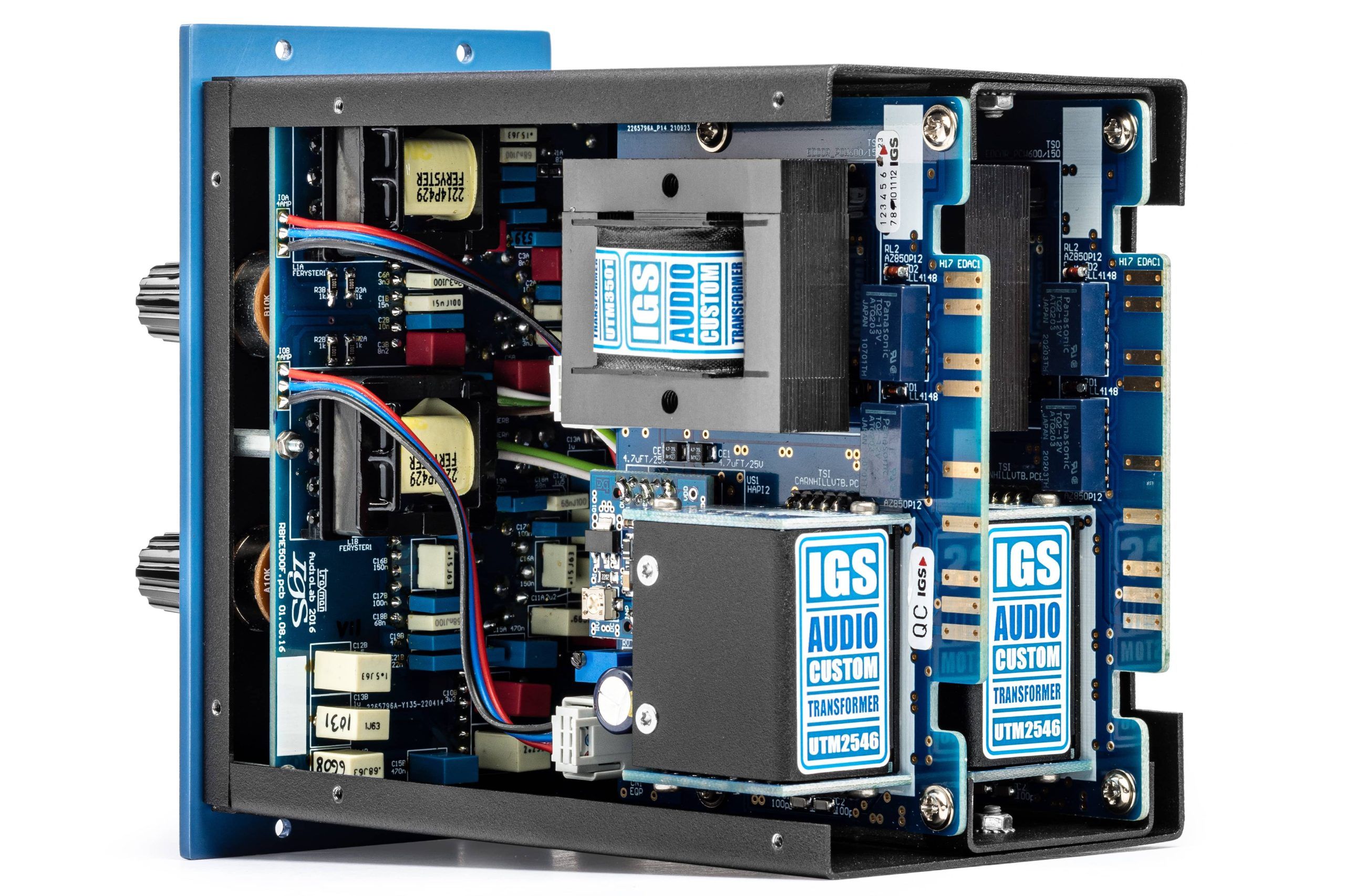
This is a passive stereo EQ built on the Pultec concept, but IGS have made several thoughtful changes to the classic layout.
The amplifier stage is solid-state Class A, with input and output transformers. Used lightly — the way I tend to use it in mastering — the transformer character is subtle. Just enough of that extra weight to feel it working. But push it harder and it can add a lot of harmonic distortion, which could be a useful tool if you’re mixing and want more colour.
The big differentiator is the control scheme. On a standard Pultec, your low-frequency boost and attenuation share a single selector. You pick one frequency and decide whether to add or subtract. The Rubber Bands separates those functions entirely. Want to boost at 60 Hz and cut at 240 Hz on the same band? You can. The low-frequency options span 20, 30, 60, 100, 180, and 240 Hz.
Up top, the high-frequency boost offers 5, 6, 8, 10, 12, and 15 kHz. It doesn’t start as low as a standard Pultec — the EQP-1A famously begins at 3 kHz — and there are times I wish it dipped lower. Still, the range it does cover is well chosen for most material. The attenuation side extends further to 6, 8, 12, 16, 20, and 24 kHz. Having those extra attenuation bands means you can address harshness without pulling the life out of the mix.
The bandwidth control is a stepped switch that adjusts Q from 0.5 through to 4. At the wide end, you get a broad, gentle curve that adds air without calling attention to itself. Dial it up narrow, and the filter becomes quite focused.
It suits a wide range of material. My one caveat — if the low end is already dense with harmonics, the transformer character can push it a little further than intended. In those cases, I reach for something cleaner.
Elysia Xmax 500
Reviews give you the specs. Using it is where the education happens. The more sessions I run through this compressor, the more I discover it can do.
It operates as a two-band compressor, but the upper band is where the clever stuff happens. That section splits internally into mid and side components. A blend knob controls how aggressively that split is enforced. Turn it fully down and it behaves like a conventional single-band bus compressor. That’s important — pushing the mid/side split too hard on certain material can introduce phase issues, so having the option to dial it back or disable it entirely is invaluable.
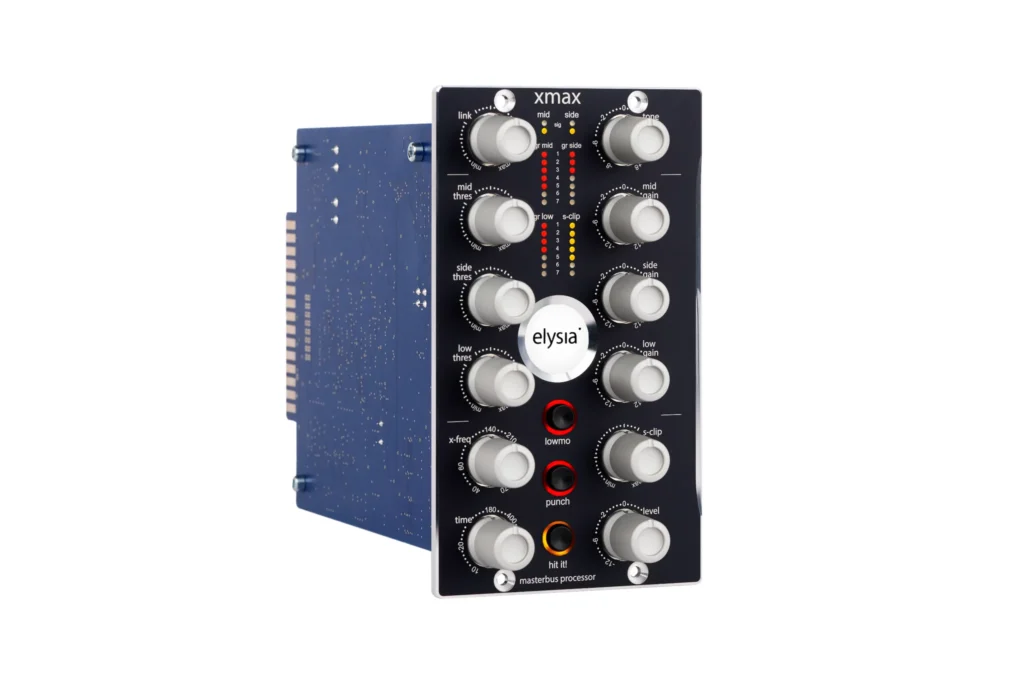
The compression itself is effective across a broad range. It can glue a mix together, preserve or even reinforce low-end impact, and add genuine depth to the stereo field.
Only two ratio settings: “normal” at roughly 1:1.45 and “punch” at about 1:2.55. I expected to stay in normal mode most of the time. That prediction didn’t hold. I’ve used punch mode extensively on techno and synth-pop masters where the kick needed to cut through with authority.
Additional features include “lowmo” — a high-pass filter applied to the side component of the low band. I generally prefer handling that with shelving EQ inside the DAW. The “tone” control is a high-shelf EQ that can add presence or gently tame the top. Useful, though not something I engage every session.
Then there’s the soft clipper. I’m genuinely surprised this doesn’t get more attention in reviews. Finding the right threshold with plugin clippers can be a process — too conservative and it’s not doing enough, too aggressive and the artefacts creep in. The Xmax clipper handles wild transients cleanly. Even when a mix is only brushing against it, the relief it provides to the final limiter is significant. On certain masters, I’ve engaged the soft clipper and bypassed everything else on the unit entirely.
Practical Impressions After Extended Use
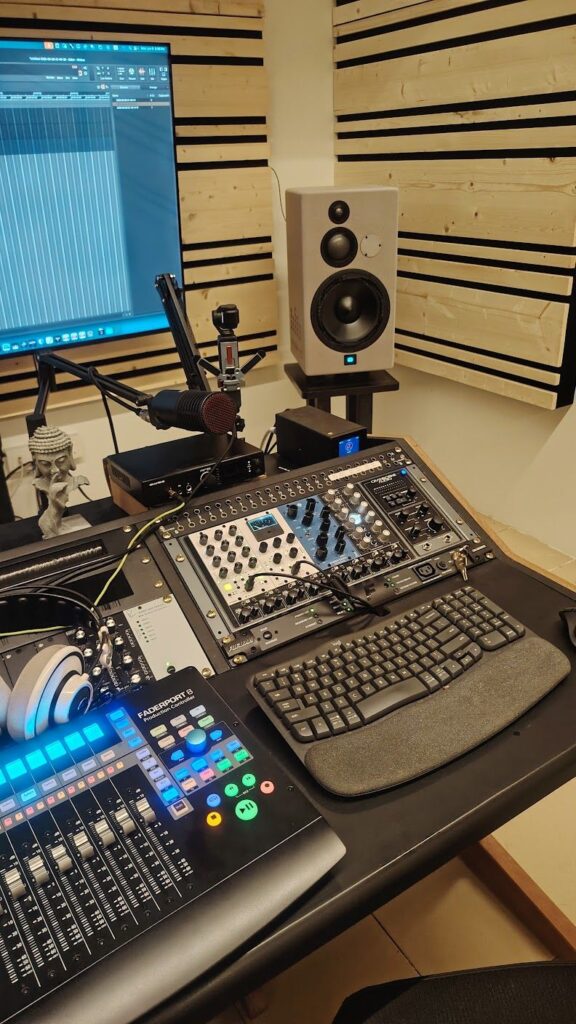
I’ve run these two modules across a wide mix of material — dense rock, sparse electronic, full album projects, single masters. Patterns have emerged.
A small low-frequency adjustment on the Rubber Bands, a subtle lift in the air band, and the transformers contribute just enough character before hitting the Xmax. The independent low controls have become indispensable — boosting the sub floor while cleaning up mud in a single pass saves time and sounds better than doing it in two stages.
The Xmax follows. Normal ratio by default, blend backed off, the soft clipper handling peak control before the limiter. The mid/side compression has been the unexpected win — it can open up a stereo image in a way that feels natural, without touching any imaging plugins.
If you’re building a hybrid chain and wondering where to invest first, this combination covers more ground than you’d expect from two modules.
If you’re curious about how these units might sound on your own music — whether it’s a single, an EP, or a full album — get in touch. I’m happy to talk through what a master could look like and how this analogue front end might work for your sound.